
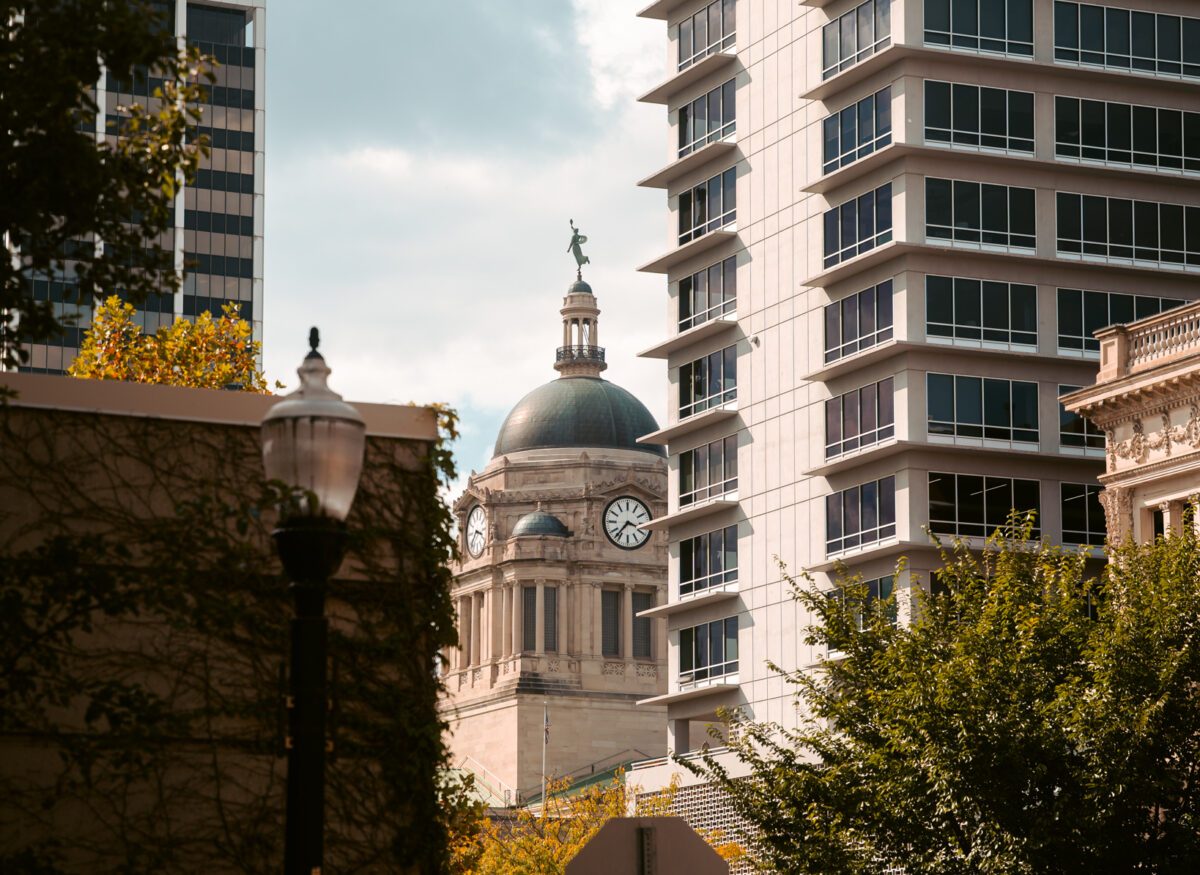
Last month, staff members from the DTFW team attended the International Downtown Association, or IDA’s, 71st Annual Conference & Marketplace in Washington D.C., where they gathered with other urban leaders from across the globe. This year’s conference, titled “Interwoven: The Power of Passion, Place & Purpose,” provided a look into the history, culture and innovation of the nation’s capital. The team had unique opportunities to discuss trends, challenges, and solutions in urban place management with others who have tried-and-true firsthand experience.
Here are DTFW’s top takeaways from this year’s IDA conference:
Tamara
The IDA conference was a great time to pull the curtain back and view how other organizations like ours operate. Learn about their wins and their challenges. About the ways we are similar and the ways we differ. I particularly found the conversation around downtown compositions interesting—former “ideal” downtown models had 70% office space and 30% residential space, but the IDA is now suggesting that for a thriving downtown community, office space should be reduced to 30% and residential increased.
The IDA has advocated for this change through the introduction of house bill H.R. 2410 – Revitalizing Downtowns and Main Street Act. This bill was introduced to the Ways and Means committee on March 27, 2025 with the goal of “amending the Internal Revenue Code of 1986 to provide an investment credit for converting non-residential buildings to affordable housing.” I’m eager to see this bill become law because it would have a tremendous impact on our downtown landscape.
Kim

I was grateful to attend the IDA Conference in Washington, to hear from our peers both nationally and internationally, and meet others working in the same field. It was encouraging to learn that downtown districts all over are facing the same challenges we face. It’s the same scenario everywhere: empty office space and less daytime foot traffic over the past few years. Converting unused office space to housing and offering later retail hours for evening visitors are among the changes that may be on the horizon.
It was also comforting to learn there are a lot of things we are doing correctly, like offering a clean downtown with public art, parks and family-friendly events throughout the year. These things make a strong downtown community, and we do our best to welcome everyone to enjoy the art, entertainment, shopping and dining.
Preston
The IDA conference for me reinforced a lot of what we already talk about and work toward at Downtown Fort Wayne. Downtowns thrive when bold vision meets practical action. Public investment must be visible to attract private investment—tangible improvements signal confidence and invite others to follow. This is “incremental radicalism”: small, steady actions that drive transformative change. But intuition isn’t enough to drive our budgets and our actions. Data tools like sentiment analysis help us understand not just what people do, but what they think and feel. Downtown organizations also need to watch for mission creep, ensuring new initiatives align with their services plan, vision, and mission. Strategy only works in the context of capability—plans must match the organization’s ability to execute.
The biggest call-to-action I took away is for business improvement districts and economic improvement districts to strengthen relationships with commercial real estate investors and developers, who shape what gets built, leased, and invested in. To shape the future of downtowns—not just react to changes as they come—we must be at the table with them, aligning vision, strategy, and investment.
Alex

My biggest takeaways had to do with walkability, ground-level retail, tourism, and more housing!
Think of Fort Wayne as Johnny Appleseed’s favorite fruit…downtown is the core of the apple. A walkable, healthy downtown core means a healthy city and region. Walkable areas of our city represent about 3% of the total area, but they also represent 57% of the total GDP (Cushman & Wakefield; Places Platform). Consider your last theme park or zoo experience; you walked everywhere and you liked it. Everything was designed and placed with intention, which made walking more appealing. Likewise, a city’s walkability improves with intentional design: wider sidewalks—like the urban trail—narrower roads, fewer traffic lanes, lower speed limits, less emphasis on cars moving quickly through the city and more emphasis on pedestrian safety, clearly marked bike lanes, greenery, a pharmacy, a grocery, and an active streetscape. By streetscape I mean ground-level retail, parklets, outdoor dining, clean streets, trash bins, public art… All of these elements combined encourage people to walk rather than drive.
Overwhelmingly, downtowns across the country are suffering from an excess of office space, and downtowns have failed to build housing and non-office spaces. Today most major downtowns suffer from a 20-30% building vacancy rate (Cushman & Wakefield; Places Platform). This is not just empty ground-level retail, but stories of vacant office space. Other cities are focusing on converting those vacant offices into residences. Although work-from-home has become more commonplace, data shows that people who live closer to their offices are more likely to opt to work there. Therefore, it is a multifaceted strategy to provide more housing in our downtown: It increases the number of people choosing to work in the nearby office spaces, and because of that, we have fewer people driving and more people walking, which in turn forces us to further enrich the walkability of our city.
Many people don’t think of Fort Wayne as a tourist destination, but 70% of all foot traffic is from visitors, not commuters or residents. Ground-level retail and tourism-drivers don’t always happen organically though. Other downtown improvement districts actively work in tandem with property owners and their city governments to develop accessible, affordable businesses in ground-level spaces. Three-year subsidy programs, lower rental rates for certain types of businesses, small-business support for ground-level retail, and attracting large-scale tourism venues are all methods being used to ensure lower vacancy rates on the ground level. There are myriad ways we can advocate for a richer ground-level retail experience in Downtown Fort Wayne. (Cushman & Wakefield; Places Platform)
I came away from the IDA conference inspired! Other DIDs are implementing dozens of strategies to ensure a healthier downtown, and I am excited to implement some of these ideas in Fort Wayne.
About the writer
Molly Conner is a Fort Wayne native, freelance writer, and digital marketer. Having lived in Downtown Fort Wayne throughout her twenties, she loves watching her stomping grounds grow. Passionate about storytelling and community, she’s eager to tell Downtown Fort Wayne’s story piece-by-piece—exploring the people and places that make it unique.
Have a story to share? Shoot her an email!